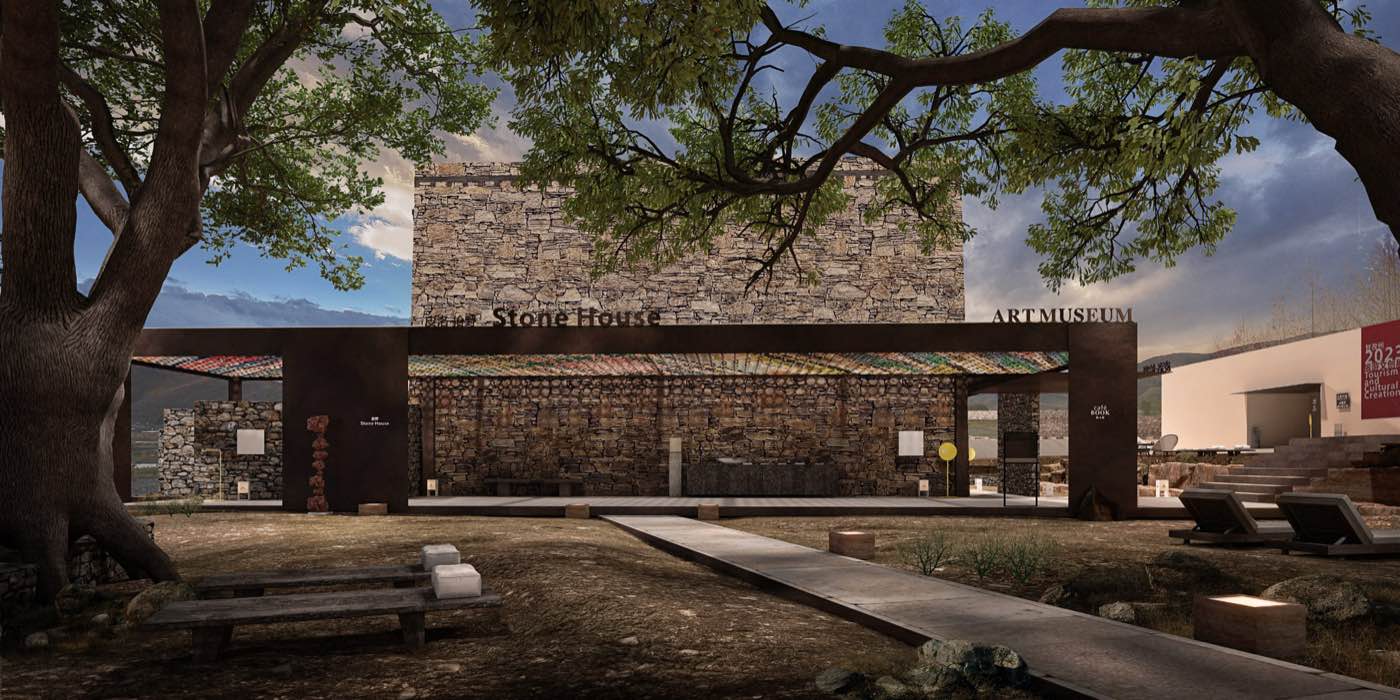
Near the Piluo site — where palaeolithic hand-axes rewrote the early human history of the plateau — an abandoned Tibetan farmhouse is brought back to life. The massive rammed-earth and stone envelope is retained and repaired; within it, a new timber structure carries floors, stairs and openings tuned to new uses.
The house becomes a small cultural station for the valley: hearth room and tea space below, exhibition and lodging above, with the roof terrace returned to its traditional role as the household’s open-air room. Old and new remain legible to each other — the thick silent walls, and the light frame that now lives inside them.